+86-15857877666
Home / Products / Check Valve
Automatic Non-Return Protection
CHECK VALVES. FLOW ONE WAY.
ANSI(API)、DIN、GOST、EN、JIS、GB etc.
Unlike an isolation or control valve, it normally has no external operator. Its closure member—disc, piston or plate—responds directly to flow velocity, differential pressure, gravity and, where fitted, spring force. Correct selection depends on cracking pressure, allowable pressure drop, closing response, installation orientation and the transient behavior of the system.
Home / Products / Check Valve
01 · Definition

WHAT IS A CHECK VALVE?

BOYE VALVE GROUP CO., LTD.
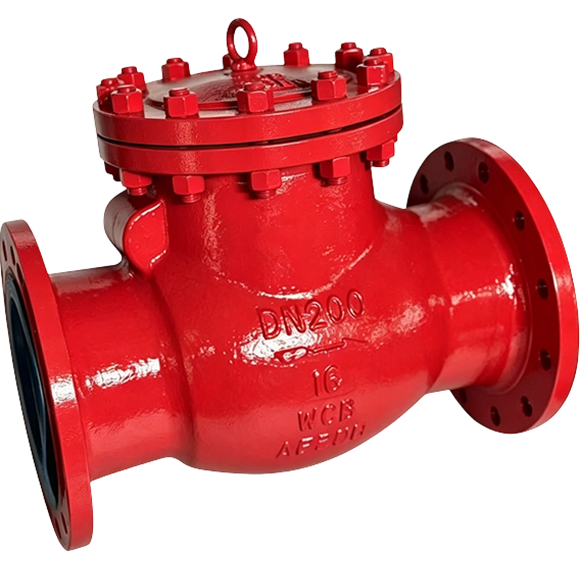
A check valve is a self-acting, one-directional valve that permits flow in the intended direction and automatically prevents reverse flow.
A ball valve uses a spherical closure element with a central bore. When the bore aligns with the pipeline flow, the valve is fully open; turning the stem 90 degrees, the bore aligns with the body, the valve is fully shut.
Unlike the linear travel of gate and globe valves, a ball valve completes its operating stroke in a quarter turn. This short, predictable motion suits both manual and automated isolation duties.
BOYE VALVE GROUP CO., LTD.
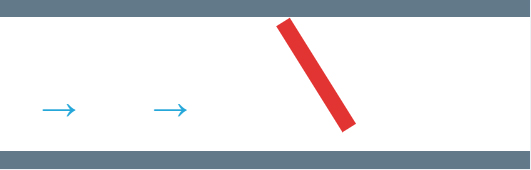
FORWARD DIFFERENTIAL PRESSURE LIFTS THE DISC · REVERSE PRESSURE RETURNS IT TO THE SEAT
03 · Applications
Where are ball valves used?
Ball valves are selected where tight isolation, low torque, quarter-turn operation and compact installation are required. Common duty areas include:
  • Power Plant

    +

    Power Plant

    Provides high-pressure, high-temperature valve solutions for thermal and nuclear power plants, ensuring safe and stable steam and feedwater control.

    + Learn More
  • Water Conservancy

    +

    Water Conservancy

    Supplies large-diameter gate valves, butterfly valves, and check valves for water conservancy projects to ensure efficient water conveyance and flood control.

    + Learn More
  • Oil Industry

    +

    Oil Industry

    Delivers reliable pipeline valves for the oil industry, suitable for high-strength and corrosion-resistant requirements in crude oil extraction and long-distance transportation.

    + Learn More
  • Chemical

    +

    Chemical

    Manufactures acid and alkali resistant ball valves, globe valves, and check valves made of stainless steel and alloy materials, precisely controlling the flow of various corrosive media.

    + Learn More
  • New Energy

    +

    New Energy

    Focuses on high-purity and zero-leakage valves for new energy fields such as photovoltaics and hydrogen energy, meeting the stringent requirements of clean energy production.

    + Learn More
04 · CONSTRUCTION
Which parts make up a check valve?
Four pressure-retaining and functional elements control integrity, guidance and shut-off performance.
BOYE VALVE GROUP CO., LTD.
  • 01Body
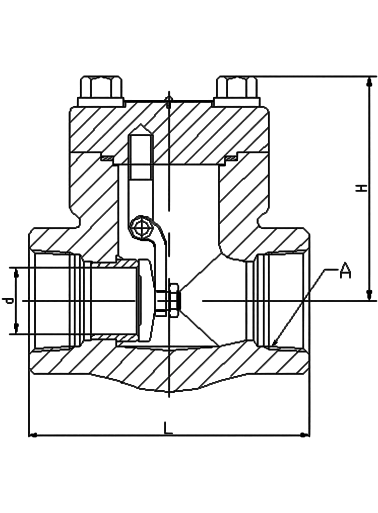
    Primary pressure boundary containing the flow passage, end connections, seat pocket and internal supports.
  • 02Bonnet / Cover
    Closes the body opening and permits assembly or maintenance; commonly bolted or pressure-sealed.
  • 03Disc
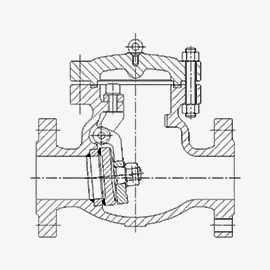
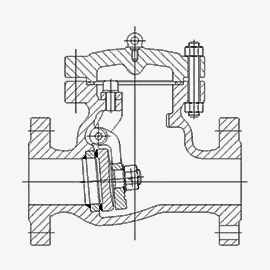
    Moving closure member. It swings about a hinge or lifts linearly in a guide under differential pressure.
  • 04Seat
    Stationary sealing surface mating with the disc. Metal seating and hardfacing suit demanding service.
05 · OPERATING PRINCIPLE
How does a check valve work?
Forward pressure must exceed downstream pressure plus the closure member’s weight, friction and any spring load. The resulting cracking pressure opens the flow path. When velocity falls, gravity, spring force and reverse differential pressure return the disc to its seat.
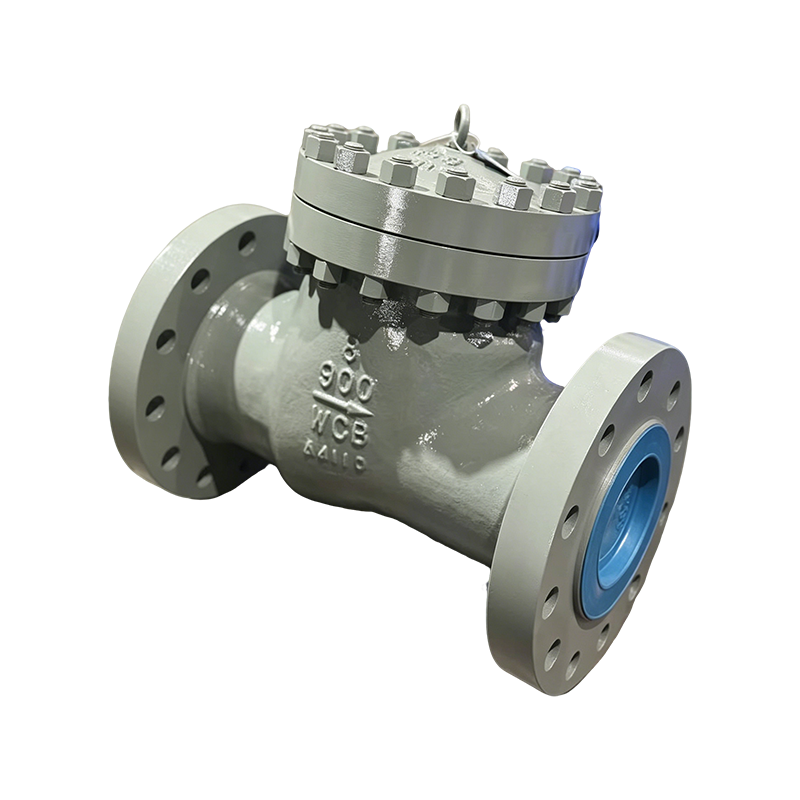
  • 01 Swing Check
    How does an API swing check valve operate?
    Medium enters from below and lifts the axially guided disc upward. When upward velocity is insufficient, gravity—and spring force where specified—moves the disc downward to close. The symmetric flow path and compact envelope suit vertical risers.

    Install only in the designated flow direction, normally upward.

    Verify minimum velocity so the disc reaches a stable open position.

    Confirm cracking pressure where low-pressure systems or gravity flow are involved.

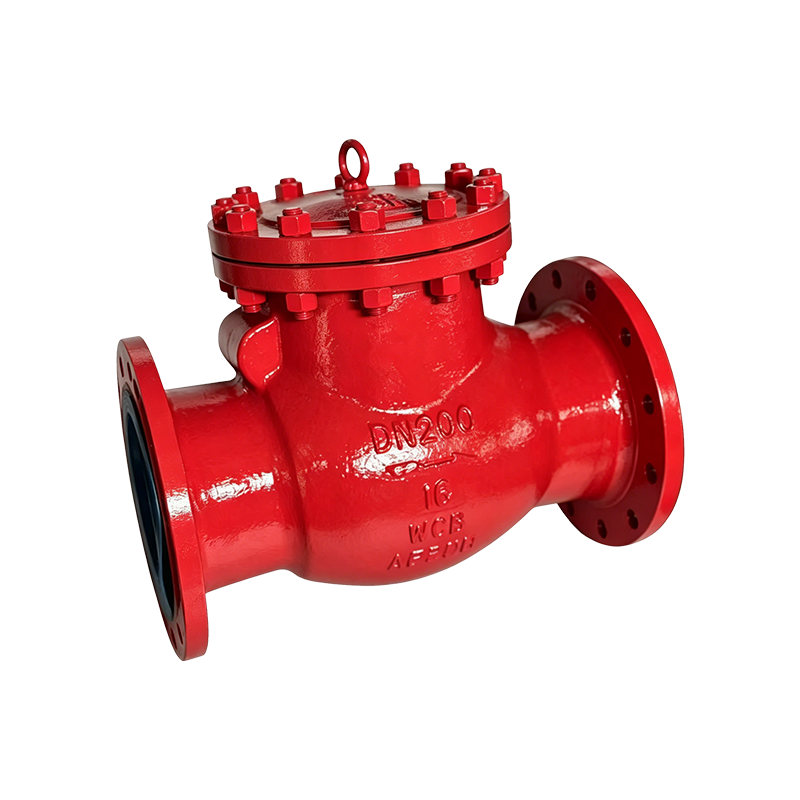
  • 02 Swing Check
    How do GB, DIN and GOST swing patterns differ?
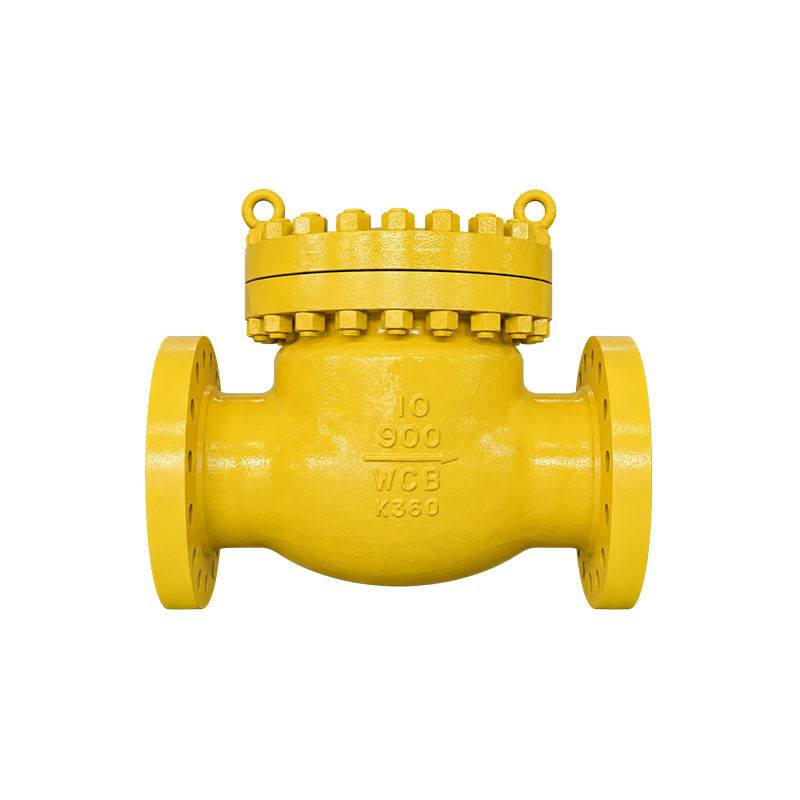
    The operating principle remains the same: the hinged disc opens with forward flow and closes by gravity and back pressure. The visible body and bonnet envelope, flange geometry, face-to-face dimensions, marking and material designation change to satisfy the selected national or project standard.

    Specify the exact design, flange and face-to-face standards.

    Confirm horizontal or upward-flow vertical installation.

    Match regional documentation, certification and inspection requirements.

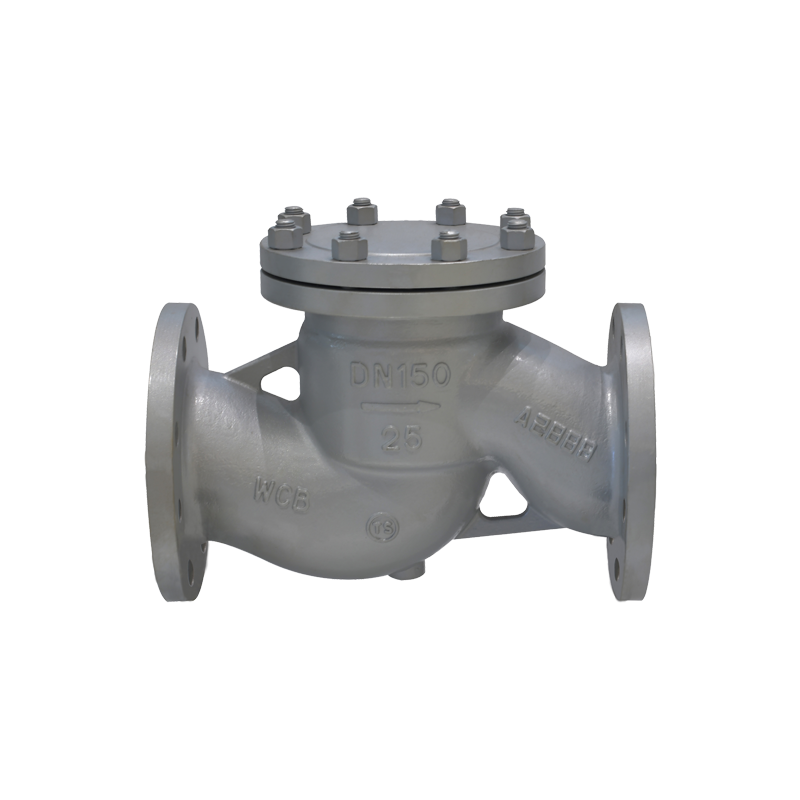
  • 03 Lift Check
    How does a lift check valve operate?
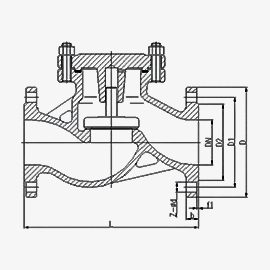
    Forward pressure raises the guided disc or piston vertically from the seat. When the pressure differential disappears or reverses, the disc descends along its guide and reseats. Short, controlled travel promotes faster response than a conventional swing pattern.

    Generally installed in a horizontal line unless specifically designed otherwise.

    Best for clean media; particles may interfere with the guide or seating surface.

    The tortuous flow path normally creates a higher pressure drop than a swing check valve.

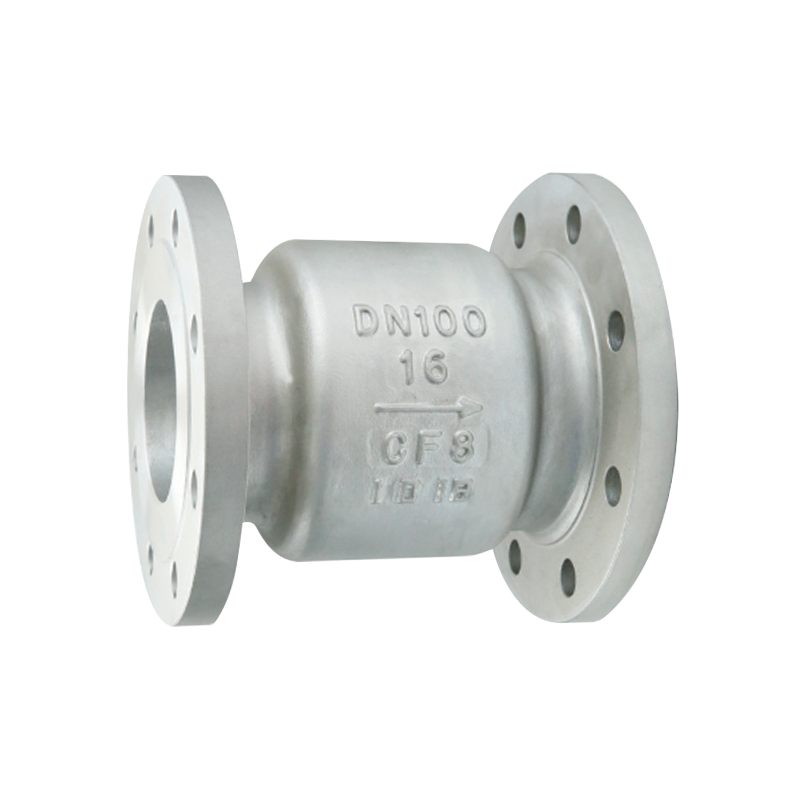
  • 04 Vertical Lift
    How does a vertical lift check valve operate?
    Medium enters from below and lifts the axially guided disc upward. When upward velocity is insufficient, gravity—and spring force where specified—moves the disc downward to close. The symmetric flow path and compact envelope suit vertical risers.

    Install only in the designated flow direction, normally upward.

    Verify minimum velocity so the disc reaches a stable open position.

    Confirm cracking pressure where low-pressure systems or gravity flow are involved.

06 · PERFORMANCE
What advantages can a correctly selected check valve provide?
  • 01
    Automatic Protection
    No external power, signal or operator is required for basic non-return action.
  • 02
    Equipment Protection
    Reduces reverse rotation, pressure reversal and contamination risk at pumps and compressors.
  • 03
    Process Integrity
    Maintains the intended flow direction between process units, tanks and parallel lines.
  • 04
    Low Operating Demand
    The process medium supplies the opening force, simplifying automation and maintenance planning.
  • 05
    Broad Service Range
    Cast, forged, metal-seated and pressure-seal designs cover water through severe steam duty.
  • 06
    Connection Flexibility
    Flanged, butt-weld, socket-weld, threaded and wafer patterns integrate with varied piping classes.
  • 07
    Pressure Retention
    Properly selected seats limit reverse leakage and help retain priming or line pressure.
  • 08
    Lifecycle Value
    Simple self-acting construction can deliver long service with correct velocity and material selection.
O7.PROCUREMENT CHECKLISI
PURCHASING A CHECK VALVE? WHAT SHOULD YOU DEFINE BEFORE
Complete operatina data protects serviee life quotation accuracy and comoliance, check valves do not use handwheels or bevel gearboxes in normal service, the essential selection inputs are flow dynamics, orientation and closing response.
  • Plant and service
    Identify chemical plant, power station, steel mill, refinery, nuclear facility, waterworks, pipeline or other duty. State project specifications, safety classification and inspection scope.
    01
  • Process medium
    Define fluid, phase, concentration, solids, corrosiveness, erosion potential, toxicity and flammability. Provide design and operating pressure and temperature.
    02
  • Materials and sealing
    Medium, pressure and temperature drive body/bonnet, disc, hinge or guide, seat and hardfacing selection—the core technical and commercial inputs.
    03
  • Installation and dynamics
    Confirm horizontal, vertical-up or inclined installation, flow direction, available space, pump/compressor curve, velocity, pulsation and acceptable closing time. Specify lever, counterweight, dashpot or spring assistance only where transient analysis requires it.
    04
  • Size, pressure and standards
    Provide DN/NPS, PN/Class, design standard, face-to-face, flange or weld-end standard, test standard, leakage requirement, NACE/low-temperature requirements and documentation language.
    05
  • Inspection and deliverables
    Define EN 10204 3.1/3.2 certificates, PMI, NDE, pressure testing, paint system, witness points, spare parts and export packing.
    06
  • Flanged
    Removable and maintenance-friendly; common in process plants, utilities and equipment connections. Confirm RF, RTJ or FF facing and drilling standard.
  • Butt-Weld
    Permanent, high-integrity joint for high pressure, high temperature, hazardous media and duties where external leak paths must be minimized.
  • Socket-Weld
    Compact connection for small-bore, higher-pressure forged piping. Apply project limits for crevice corrosion and thermal cycling.
  • Threaded / Wafer
    Threaded ends suit permitted small-bore utility service. Wafer or lug designs save weight and space between flanges in compatible services.
08 · BONNET CONNECTION
BOLTED BONNET OR PRESSURE SEAL - WHICH CONSTRUCTION FITS YOUR DUTY?
  • BOYE VALVE GROUP CO., LTD.
    MAINTAINABLE HOINT
    Bolted Bonnet Check Valve
    A gasketed body-to-bonnet joint is compressed by external studs and nuts. It is familiar, accessible and economical across low, medium and many high-pressure classes.
    Typical duty: general oil & gas, chemical, water, utility and conventional process service. Select gasket and bolting for pressure, temperature, corrosion and thermal cycling.
  • BOYE VALVE GROUP CO., LTD.
    Severe Pressure–Temperature
    Pressure Seal Check Valve
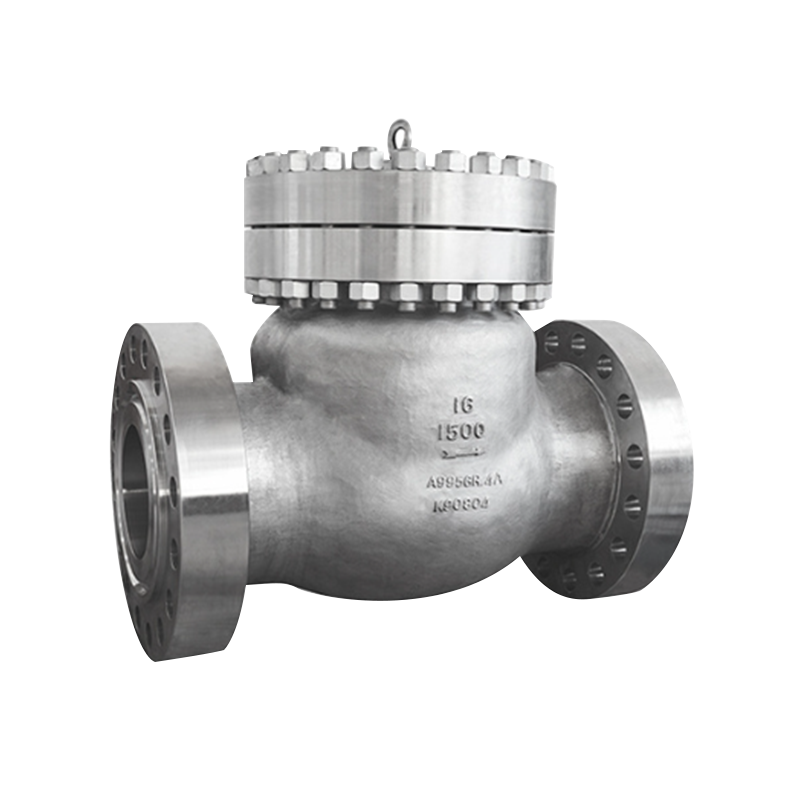
    Internal line pressure energizes a pressure-seal gasket against the body/bonnet seating surface. Sealing force increases as pressure rises, creating a compact joint for severe service.
    Typical duty: main steam, boiler feedwater, high-pressure power generation and severe refinery service—commonly Class 900, 1500 and 2500.
09 · FUNCTIONAL DIFFERENCE
How is a check valve different from actively closed valves?
Selection Point Check Valve Gate / Globe / Ball / Butterfly Valve
Operating force Process differential pressure, gravity and/or spring force Handwheel, lever, gearbox, electric, pneumatic or hydraulic actuator
Primary function Automatically prevent reverse flow Intentional isolation, throttling or flow control depending on design
Command signal No external command in normal operation Operator action or control-system signal
Position control Disc position follows instantaneous flow conditions Position can normally be commanded and held
Critical sizing issue Velocity, cracking pressure, pressure drop and slam behavior Isolation duty, torque/thrust, Cv and required shut-off class
Typical failure concern Chatter, slam, stuck disc or reverse leakage Seat leakage, stem/packing leakage, actuator or torque failure
  • Self-Acting
    Check valve response
    The medium itself decides when the disc opens and closes. Stable operation therefore depends on the actual flow rate and system transient—not merely the nominal pipe size.
  • Actively Operated
    Isolation and control response
    Gate, globe, ball and butterfly valves move on command. Their operator must supply sufficient torque or thrust and can hold a selected position.
content
Click to consult BOYE’s exclusive quotation and get the industry-leading 30% performance improvement solution immediately!